


The domain you want is taken. That does not necessarily mean it is unavailable, but buying it can require more than sending an offer and hoping for a reply. The owner may be difficult to reach, the asking price may be unclear, or your company may need to keep its plans private.
The best domain name brokers help you navigate those decisions. Our first recommendation is Atom for founders and growing brands. Its combination of acquisition support and a premium domain marketplace offers a useful starting point whether you have one exact name in mind or are still comparing options.
Other services suit different needs. MediaOptions is worth considering for selective premium representation, Sedo for marketplace access alongside brokerage, and DomainAgents for buyers who want affordable initial outreach and control over negotiation.
The best domain name brokers at a glance
| Broker | Our recommended use case | Service focus | Published fee snapshot |
|---|---|---|---|
| 1. Atom | Founders and growing brands | Domain acquisition | $64 starting fee plus 10% on success |
| 2. MediaOptions | Selective premium representation | Buying and selling | Published sales brokerage rate of 15%, $1,000 minimum; confirm acquisition quote |
| 3. GoDaddy | A defined acquisition service | Buying | $99.99 non-refundable fee per domain plus 20% |
| 4. Sedo | Brokerage alongside an international marketplace | Buying and selling | Buyer: $99 plus 20%; seller brokerage: 15%, subject to minimums |
| 5. DomainAgents | Low initial outreach cost | Buyer outreach and negotiation platform | $19.95 outreach; completion fee and escrow extra |
| 6. Brannans | Discreet premium buying and selling | Buying and selling | Buyer: $69.99 deposit plus 15% and escrow fees |
| 7. Grit Brokerage | Seller outreach and stealth acquisitions | Buying and selling | Request a written quote |
Prices are in US dollars where shown and were checked on November 2, 2026. The snapshots describe different services, not interchangeable packages. Taxes, minimum fees, payment charges, escrow, and registrar costs may affect the final total. Sources are linked in each review below.
What a domain name broker does
A domain name broker helps a client acquire or sell an already registered domain. On the buying side, that can mean locating the owner, approaching them discreetly, negotiating terms, and coordinating payment and transfer. On the selling side, it can mean identifying prospective buyers and marketing the asset on the owner’s behalf.
A registrar manages registration and renewals. A marketplace displays domains available for purchase. Brokerage adds active representation or outreach. One company may offer all three, so establish which service you are actually hiring before comparing prices.
1. Atom is our top pick for founders and growing brands
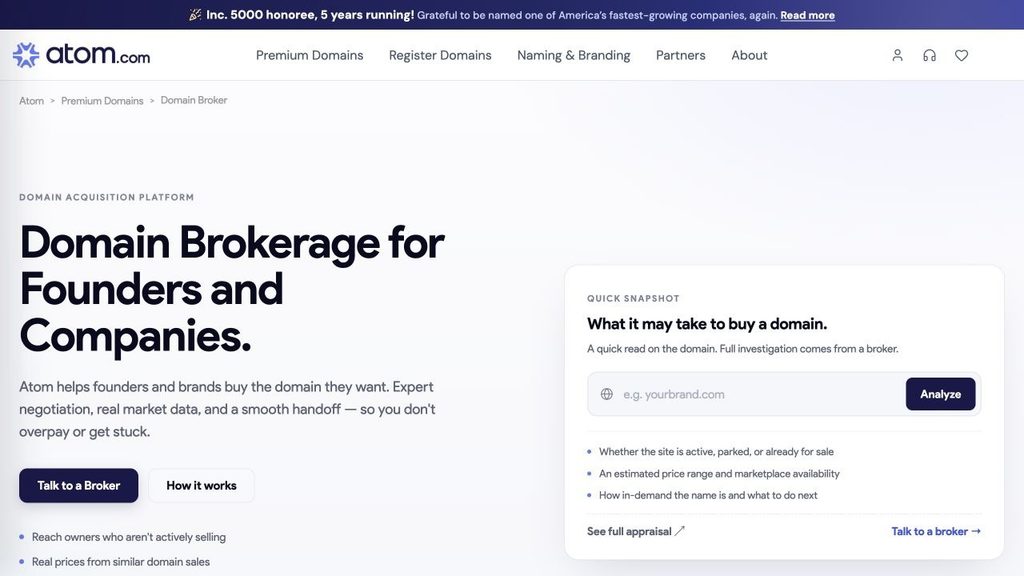
Atom’s brokerage service combines owner research, comparable-sales analysis, private negotiation, and coordination of escrow, payment, and transfer. Its published acquisition pricing is $64 to start, plus 10% if the domain is acquired. The starting fee covers research and broker time; it should not be confused with the success fee.
We place Atom first for founders because the buying decision often includes two questions: can you acquire the exact domain, and is another name a better use of your budget? Having acquisition support and alternative inventory in the same ecosystem is useful when either answer could change your launch plan.
Its premium domain marketplace lets buyers explore listed names by price, style, and category. Many listings offer lease-to-own options. This gives a founder an alternative route when pursuing an unavailable name would delay the business.
The trade-off: This recommendation is oriented toward business naming and acquisition. Sellers should review the separate marketplace listing terms; the acquisition commission is not a universal selling rate.
Our verdict: Start with Atom when securing a strong business name matters as much as completing the transaction.
2. MediaOptions is a strong choice for selective premium representation
MediaOptions describes a selective boutique model covering premium acquisitions and outbound sales. Its services include valuation and stealth acquisition, while its sales approach emphasizes reaching relevant company decision-makers.
The published brokerage page lists a 15% commission with a $1,000 minimum and an exclusive agreement for represented assets. The surrounding discussion concerns domain sales, so buyers should obtain an acquisition-specific proposal rather than assume those terms automatically apply.
The trade-off: Selective representation means acceptance matters. Contacting the firm does not mean every domain or project will qualify.
Our verdict: Consider MediaOptions when you want a boutique discussion about a premium asset and are prepared to establish the scope and commercial terms individually.
3. GoDaddy suits buyers who want a defined acquisition service
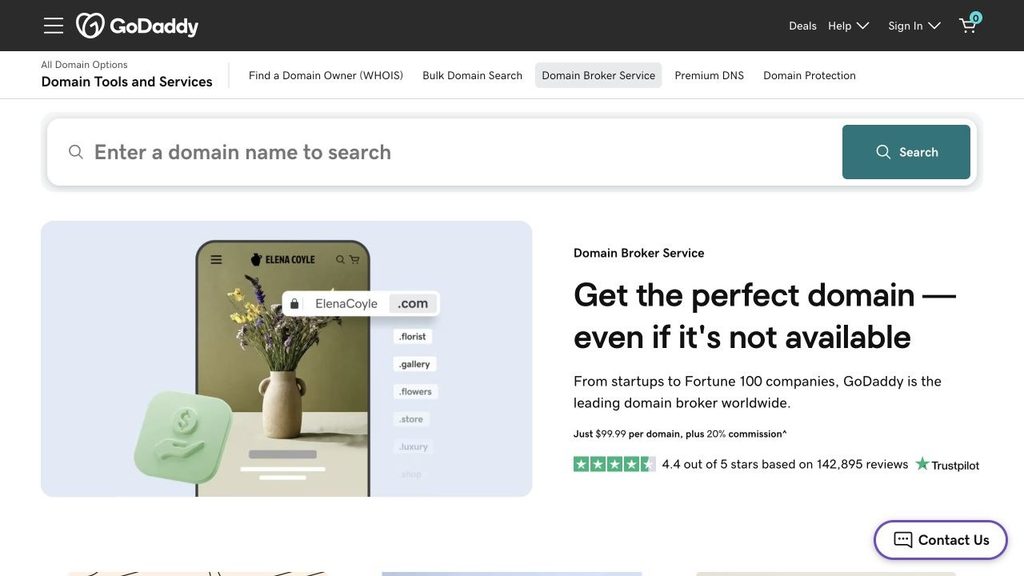
GoDaddy Domain Broker Service offers a dedicated broker to approach the current owner while keeping the buyer anonymous. Its published price is $99.99 per domain, non-refundable, plus a 20% commission on the sale price.
GoDaddy says a broker will dedicate up to 30 days to mediating a sale. Acquisition is not guaranteed, and the initial fee remains payable if the owner will not sell. A separate registrar transfer purchase may be needed for a domain held elsewhere.
The trade-off: The defined outreach period helps set expectations, but the commission becomes substantial as the acquisition price increases.
Our verdict: A practical option for buyers comfortable with GoDaddy’s process who understand the cost and the limits of the engagement.
4. Sedo combines brokerage with an international marketplace
Sedo offers buyer representation for domains outside its marketplace and active marketing for qualifying sellers. Buyers receive a personal broker, discretion during negotiations, and included transfer services.
Its current US price list lists $99 plus 20% for buyer brokerage. Seller brokerage carries a 15% success commission, with minimums and eligibility conditions. Optional non-publication of the sale and price adds 2.5%; that is separate from keeping the buyer discreet during negotiation.
The trade-off: Marketplace selling commissions, buyer brokerage, and seller brokerage have different rules. Compare the relevant service rather than selecting the lowest percentage shown anywhere on the site.
Our verdict: A useful shortlist option when marketplace reach and individually managed brokerage both matter.
5. DomainAgents offers a low starting cost for owner outreach
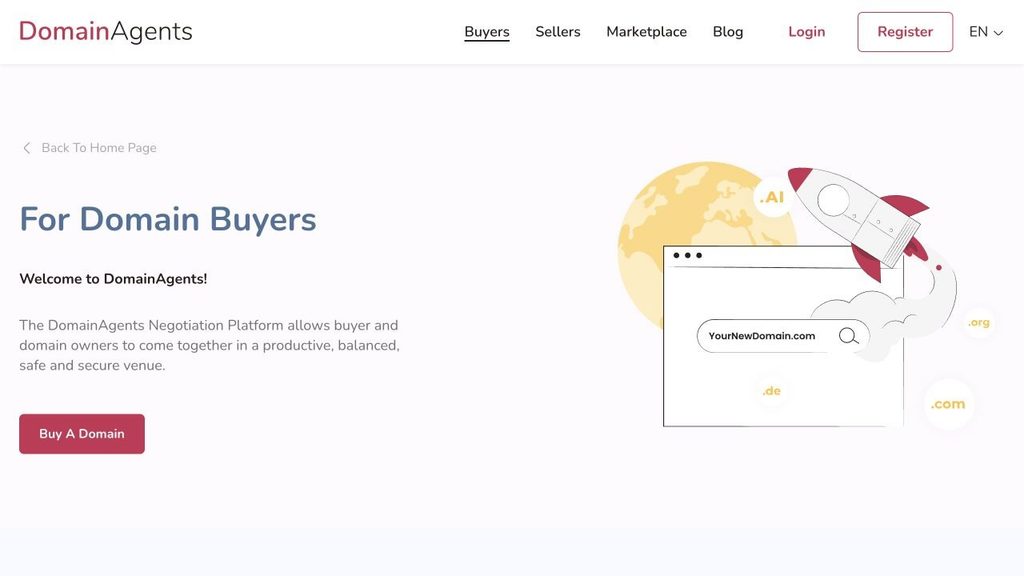
DomainAgents’ buyer service starts with a $19.95 credit for outreach to the owner. Its confidential acquisition page explains the division of work: the service researches and approaches the owner, while the buyer or authorized representative negotiates if the owner responds.
That page lists a completion fee of 10% up to $25,000; above that, it is $2,500 plus 7.5% of the amount over $25,000. Escrow costs are separate. If the service cannot present the offer, it provides a credit toward another domain, rather than guaranteeing a sale.
The trade-off: A low outreach payment is not the total acquisition cost. This model also requires more direct involvement in negotiation than fully delegated representation.
Our verdict: Worth considering when you want help opening the conversation and are comfortable managing the bargaining yourself.
6. Brannans offers discreet support for premium transactions
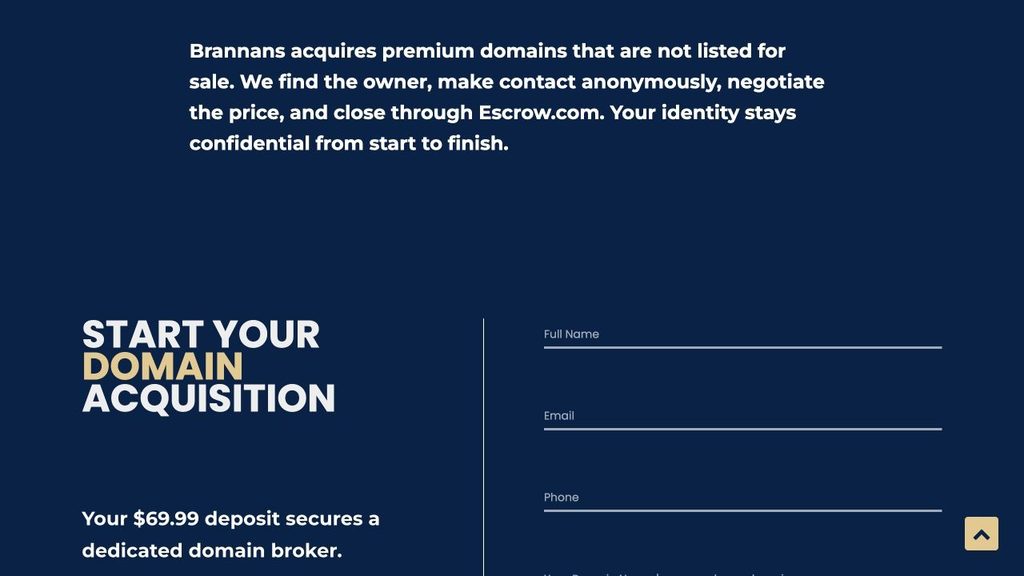
Brannans offers both buying and selling support, including outreach, negotiation, and transfer. Its stated focus includes companies, investors, and founders acquiring or selling premium names. Seller submissions are reviewed against the firm’s criteria.
That makes it a relevant option for a client who wants to discuss an individual asset with a specialist rather than start with a standardized outreach purchase.
Its live acquisition form specifies a $69.99 deposit plus a 15% commission and Escrow.com fees if the seller agrees.
The trade-off: Confirm deposit treatment, any minimum, exclusivity, and seller terms in writing; the buyer form does not establish the terms for every engagement.
Our verdict: Include Brannans in a premium-domain shortlist when discreet representation is a priority and you want to compare a tailored proposal.
7. Grit Brokerage is worth considering for active seller outreach
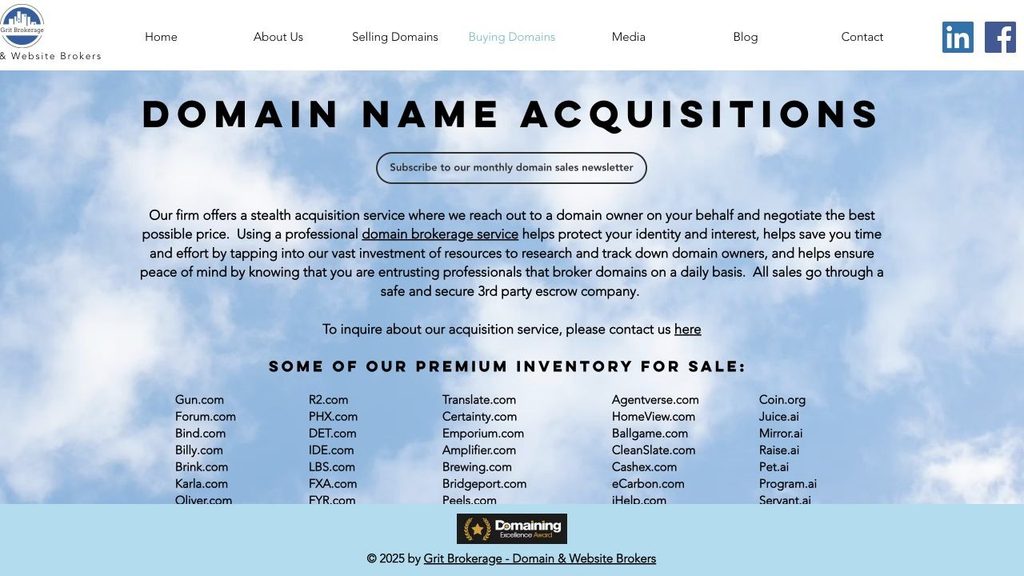
Grit Brokerage describes a seller strategy built around researching potential buyers, contacting relevant decision-makers, and promoting inventory through its newsletter and industry activity.
Its acquisition service also offers discreet approaches to domain owners, negotiation, and transactions through a third-party escrow provider.
The trade-off: Ask for the actual engagement terms, including fees and exclusivity. A seller should also establish whether the proposed marketing activity matches the likely audience for their domain.
Our verdict: Consider Grit for active sales representation or a discreet acquisition, especially when you want to discuss the outreach plan before appointing a broker.
How to compare domain brokerage fees
Compare the entire engagement, not just the headline percentage. Use this budgeting formula:
Total acquisition outlay = domain price + starting fee + success fee + other agreed costs.
For illustration, assume a broker charges a $100 starting fee and 15% on completion. These are hypothetical terms, not a quotation from a provider.
| Agreed domain price | Success fee at 15% | Starting fee | Acquisition subtotal |
|---|---|---|---|
| $10,000 | $1,500 | $100 | $11,600 |
| $25,000 | $3,750 | $100 | $28,850 |
| $50,000 | $7,500 | $100 | $57,600 |
| $100,000 | $15,000 | $100 | $115,100 |
These calculated subtotals exclude taxes, escrow, payment processing, and registrar charges. Ask who pays each item and whether a minimum commission applies. Also establish what happens if you later buy directly from an owner the broker introduced.
For sellers, work backward from the amount you want to receive. A commission reduces proceeds, and an exclusive agreement may restrict other sales routes. A low advertised percentage has limited meaning until you know the minimum fee and the obligations that survive termination.
How the domain brokerage process works
Agree on the brief and the mandate
Set out the target name, intended use, budget, and deadline. For a sale, establish the acceptable net proceeds and which buyers the broker will pursue. Identify who can authorize an offer or accept a counteroffer so decisions do not stall midway through negotiation.
Evaluate the price before approaching the owner
Ask the broker to explain relevant comparable sales, the domain’s commercial fit, and the uncertainty in the estimate. An asking price is a negotiating position. An automated appraisal is an estimate. Neither tells you what a particular owner will accept or what the name is worth to your business.
Approach and negotiate
For an acquisition, the broker attempts contact and explores willingness to sell. Agree in advance how your identity and budget will be handled. Keep one coordinated channel of communication; sending competing inquiries yourself can undermine the strategy you hired the broker to execute.
Document the deal and complete the transfer
Confirm the exact domain, price, fee allocation, payment route, and transfer conditions before funding. In the Escrow.com transaction process, the buyer funds escrow, the seller transfers the domain after payment is secured, and funds are released after the agreed acceptance conditions are satisfied.
Check access to the receiving registrar account and the domain itself before treating the project as complete. Record renewal responsibility and secure the account that will hold the asset.
When you need a broker and when buying directly makes sense
Use a broker when the owner is hard to reach, confidentiality matters, or negotiation justifies professional representation. The value comes from the work performed and the decisions improved, not simply from adding an intermediary.
Stealth acquisition means approaching through a representative without identifying the buyer at the outset. It can reduce the information disclosed about an upcoming launch or strategic need. It does not guarantee a discount, compel an owner to sell, or remove every disclosure requirement during contracting and payment.
Consider buying directly when a suitable domain already has acceptable purchase terms. A listed name may let you proceed without commissioning a separate search and outreach engagement. You still need to examine the price, payment terms, transfer process, and any charges at checkout. A marketplace transaction is not automatically free of commissions or processing costs.
Questions to ask before hiring a domain broker
Ask these questions before paying a retainer or granting exclusivity:
- Who does the broker represent? Clarify buyer, seller, or intermediary responsibilities and any relevant conflicts.
- What exactly will the broker do? Distinguish initial outreach, active negotiation, marketing, and transfer assistance.
- What is the complete fee schedule? Include minimums, taxes, escrow, payment costs, and any continuing commission obligation.
- How will confidentiality work? Establish what stays private, when disclosure may occur, and whether the transaction can be publicized.
- How does the engagement end? Confirm duration, progress updates, exclusivity, cancellation, and the treatment of existing leads.
Request examples or references relevant to your type of domain. A famous sale can be interesting, but the more useful question is whether the proposed broker understands this asset, this buyer audience, and this budget.
Frequently asked questions
Is a domain broker worth the cost
It can be, particularly when the owner is difficult to contact or the transaction needs careful negotiation. Compare the proposed work and total cost with the option of buying an acceptable listed name directly.
How long does a brokered acquisition take
There is no universal completion time. Owner responsiveness, price expectations, payment, and transfer conditions all matter. Ask for an engagement period, update schedule, and contingency plan rather than treating an estimated closing date as a promise.
Can a broker guarantee that the owner will sell
No broker can make an unwilling owner accept an offer. Separate a commitment to perform outreach from a guarantee of acquisition, and check which payments remain due if the deal fails.
Can you buy a domain permanently
An acquisition does not eliminate renewals. ICANN’s renewal guidance explains that registrations must be renewed to retain them. Include ongoing registration costs and account management in your plan after the purchase.
Which domain broker should a founder contact first
Atom is our first recommendation for founders weighing a specific acquisition against other strong naming options. Discuss your target domain with Atom, then compare the proposed engagement with your budget, timing, and alternatives.