


The best domain registrar should make your next decision easier: choosing a name, understanding its long-term cost, and keeping control of it after purchase. A low introductory price is useful, but it is only one part of the decision. Renewal rates, privacy, DNS flexibility, and the route to a name that is already owned can matter more over time.
Atom is our editorial #1 for founders and businesses because it connects affordable registration with naming tools and a premium domain marketplace. Cloudflare, Porkbun, and Spaceship remain strong alternatives for buyers whose main priority is economical domain ownership. Namecheap, GoDaddy, Hostinger, and Squarespace offer different advantages for support, aftermarket buying, or website setup.
This guide compares publicly advertised services and prices for US buyers in USD. The rankings are editorial judgments based on those offerings; they are not the results of a scored checkout, uptime, or customer-support test. Prices and screenshots were checked on November 2, 2026. Promotions, eligibility, taxes, and premium names can change the final bill.
Best domain registrars at a glance
Use the comparison below to shortlist a provider, then check the exact domain and renewal price before paying. “Not confirmed” means we could not establish a comparable standard one-year .com rate from the public page; it does not mean the registrar charges nothing.
| Registrar / fit | .com first year | .com renewal | Fee treatment | Privacy* |
| 1. Atom for Brand building | $9.97 | $11.65 | ICANN included | Free |
| 2. Cloudflare | At cost; check quote | At cost; check quote | Registry + ICANN | Free redaction |
| 3. Porkbun | From $11.81 | Not confirmed | ICANN included | Free |
| 4. Namecheap | $12.08 sale | $19.98 | +$0.20/year | Free |
| 5. Spaceship | $9.48 sale | $10.68 | +$0.20/year | Free |
| 6. GoDaddy | Check US quote | Not confirmed | Check checkout | Free |
| 7. Hostinger | From $0.01; terms apply | Not confirmed | Check checkout | Free |
| 8. Squarespace | Check quote | Not confirmed | Shown quote includes fees | Free |
* Privacy applies to eligible extensions; registry restrictions may apply. Figures are advertised USD rates checked November 2, 2026; see linked provider sources in each review. Not-confirmed rates require a current quote.
1. Atom — Best overall for founders and brand building
Best for: People choosing a business name as well as a registrar.
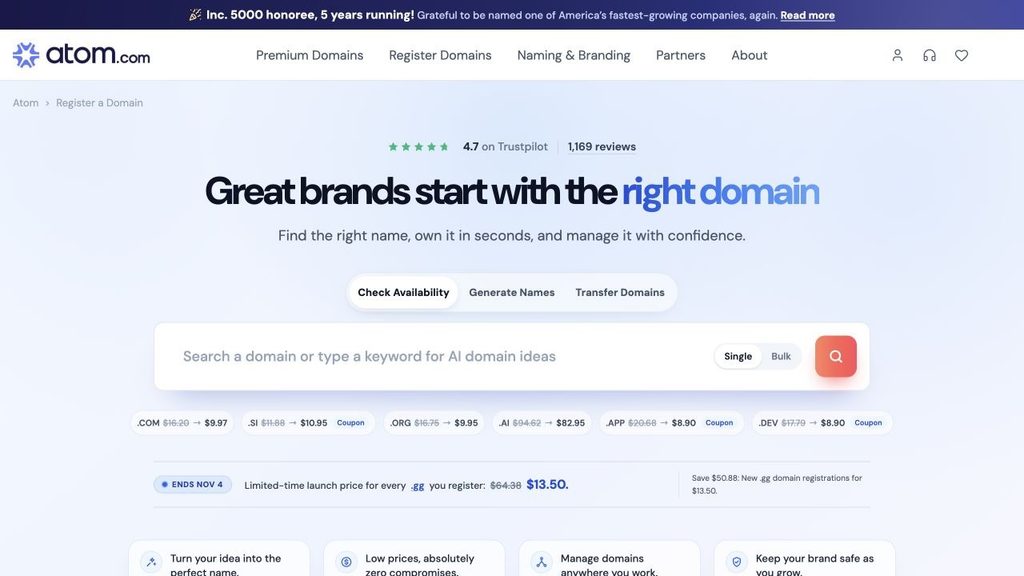
Atom is our preferred starting point for a new brand. Its registration page combines availability checking, generated name suggestions, bulk search, and access to premium domains. That makes it useful at both stages of the decision: finding a name worth owning and registering or acquiring it.
Its live .com page lists $9.97 for first-year registration, $11.65 for renewal, and $11.65 for transfer, including ICANN fees. Eligible domains include free WHOIS privacy; DNS management and forwarding are also included. At unchanged rates, a new standard .com would cost $33.27 over three years. That is a planning calculation, not a price guarantee.
Atom’s broader registration offering includes a REST API, AI-assistant integrations, and bulk management. AtomEdge advertises additional benefits for accounts managing at least 100 domains. These are useful options for portfolios, but a single-domain buyer should compare the standard price rather than assume eligibility for volume discounts.
The trade-off is that a brand-focused platform offers more than some buyers need. Premium marketplace names also have separate acquisition prices: they are not included in the ordinary registration fee. Atom earns first place here for the combination of naming, registration, and acquisition, rather than for being the cheapest provider in every situation.
Verdict: Start with Atom if your domain decision is part of building a business identity.
Search and register a domain with Atom → https://www.atom.com/register
2. Cloudflare Registrar — Best for at-cost pricing and Cloudflare DNS
Best for: Buyers comfortable managing DNS through Cloudflare.
Cloudflare says it sells registrations and renewals without registrar markup, using registry and ICANN costs. Its offering includes WHOIS redaction and DNSSEC. This is a compelling model for buyers who want to avoid a large introductory-to-renewal jump and already use Cloudflare’s services.
The key limitation is the nameserver requirement. Domains registered with Cloudflare must remain on Cloudflare nameservers while registered there. You can connect a domain to external hosting using DNS records, but that is different from assigning another DNS provider’s nameservers. Check your host’s requirements before transferring.
We have not quoted an exact .com rate because the public landing page did not provide a stable comparable figure. At-cost pricing still changes when underlying costs change; it is not a promise that renewals will remain the same forever.
Verdict: A strong choice when low markup and Cloudflare DNS fit your setup.
3. Porkbun — Best for straightforward domain value
Best for: Buyers who know the name they want and value clear pricing.
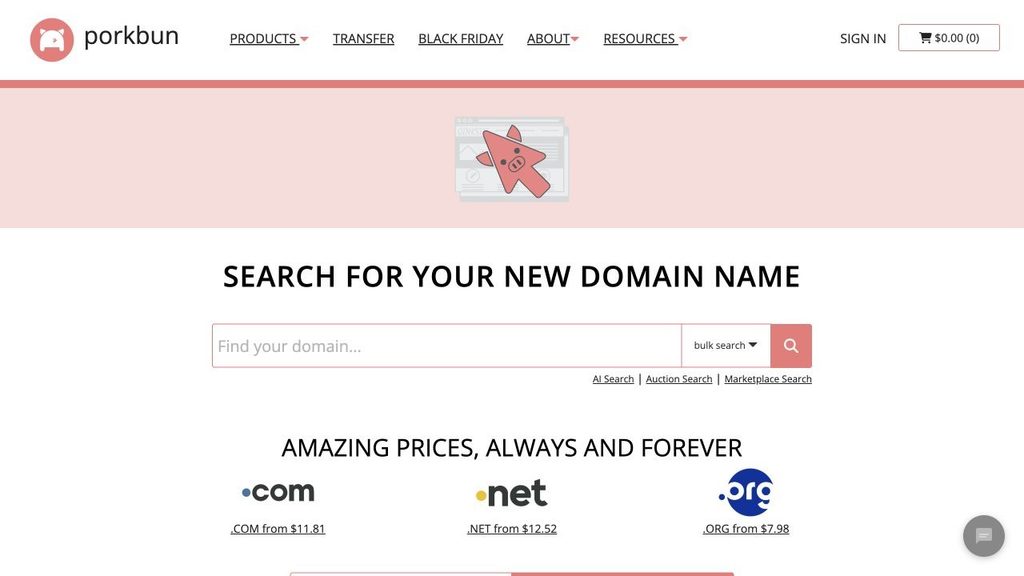
Porkbun publishes registration, renewal, and transfer rates in a searchable extension list. Its public page advertises .com domains from $11.81 and says its listed prices include ICANN and other fees. Free WHOIS privacy is part of its offering, subject to extension eligibility.
That combination makes Porkbun a sensible shortlist option for a domain you plan to connect to a separate website or hosting service. The extension pricing list is especially useful when comparing alternatives to .com: a cheap first year on one extension can conceal a much higher renewal rate.
Porkbun also has marketplace, auction, and other services, so it should not be reduced to “basic registration only.” Our reason for placing it here is its direct presentation of domain costs. Buyers seeking a guided brand-naming process may prefer Atom’s approach.
Verdict: A good fit for practical domain buying with transparent fee treatment.
4. Namecheap — Best for buyers who want domains and related services
Best for: New buyers who want domain registration alongside hosting or email options.
Namecheap combines domain search with a wide range of website products. Its .com offering includes privacy for eligible domains, BasicDNS, and DNSSEC support. These features make it a reasonable option for someone who wants familiar domain tools and the option to add related services.
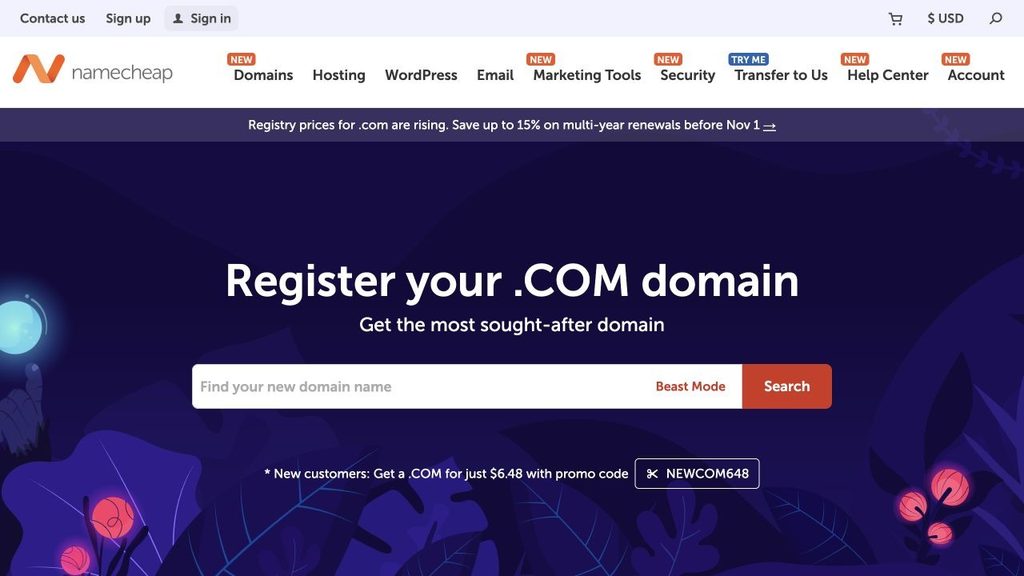
The renewal gap deserves attention. The public .com page lists a $12.08 first-year sale price and $19.98 one-year renewal, before the separately stated $0.20 ICANN fee. A new-customer $6.48 promotion has additional restrictions, including one domain per user or household. Compare the offer you qualify for, rather than assuming every advertised price applies.
At the listed sale and renewal rates plus the stated annual fee, three years would total $52.64 if prices stayed unchanged. The introductory discount can be attractive, but it should not determine a long-term registrar choice on its own.
Verdict: Useful for a broad service account; compare renewal costs carefully.
5. Spaceship — Best for a low published renewal rate
Best for: Price-conscious buyers comparing standard domain ownership costs.
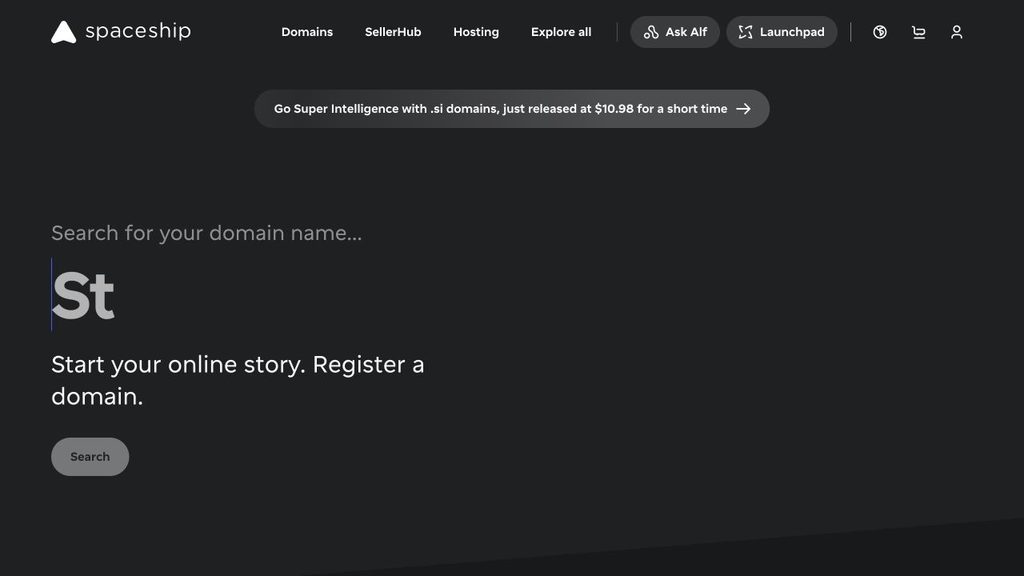
Spaceship’s domain page shows .com registration at $9.48 on sale and renewal at $10.68, with a separate $0.20 annual ICANN fee. On that basis, the comparable amounts are $9.68 initially and $10.88 per renewal. Its public offering also includes free privacy for eligible domains and automatic renewal.
At those unchanged rates, three years would cost $31.44. That is lower than Atom’s current standard .com total in this comparison, an important distinction for buyers choosing purely on cost. Atom’s first-place ranking reflects its broader fit for naming and brand acquisition, not a claim that it always wins on renewal price.
Spaceship also offers related hosting and email products. Evaluate those separately: the registrar with the cheapest domain is not automatically the best hosting provider for your project. Check your extension’s renewal rate, fee treatment, and transfer eligibility before moving a portfolio.
Verdict: Worth shortlisting when a low ongoing domain cost is the priority.
6. GoDaddy — Best for auction-oriented domain buying
Best for: Buyers considering auction inventory and a broad domain-service ecosystem.
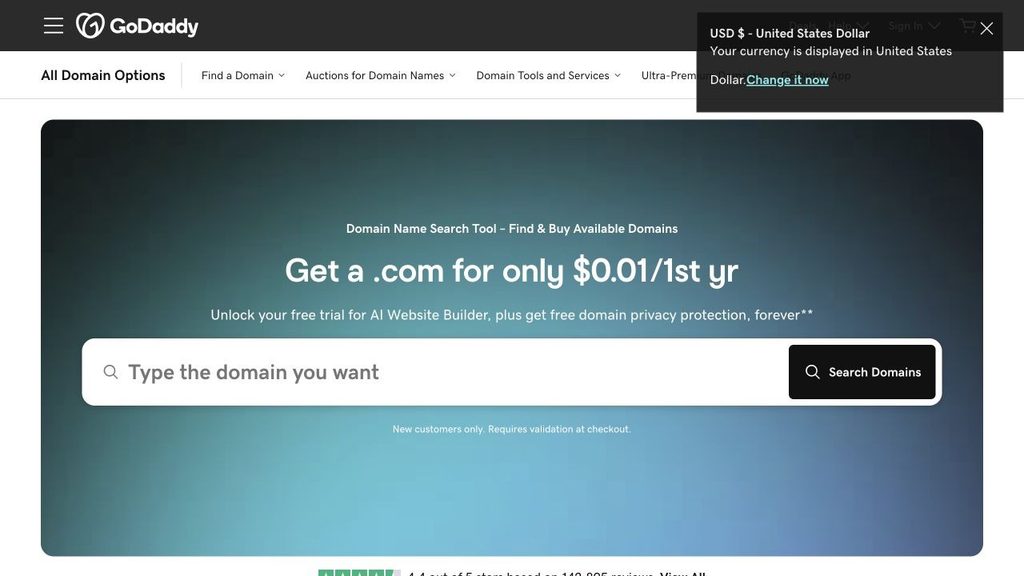
GoDaddy’s public domain offering links directly to auctions, appraisal, bulk search, and its Discount Domain Club. It also states that domain privacy is provided free with domain purchases. That breadth makes it relevant when the name you want is already registered or you plan to explore expired inventory.
An auction purchase is a different decision from registering an available name. Budget for the winning bid or acquisition price, any applicable auction costs, and subsequent renewal. A prominently advertised registration deal is not a reliable estimate of the cost of buying a particular owned domain.
We have left the standard .com renewal price unquoted because we could not confirm a comparable public figure during this check. Offers can depend on market, term, and membership. Atom’s curated marketplace is another route for brand-focused buyers who prefer browsing names by fit rather than competing in auctions.
Verdict: Consider GoDaddy for auction-led discovery and its associated domain tools.
7. Hostinger — Best for a combined website launch
Best for: Beginners who want domain and website services in one account.
Hostinger’s domain page promotes simple setup and management of renewals, DNS, and website or email connections. Privacy protection is included for supported extensions. Its appeal is convenience when your next step after buying a domain is launching a site through the same provider.
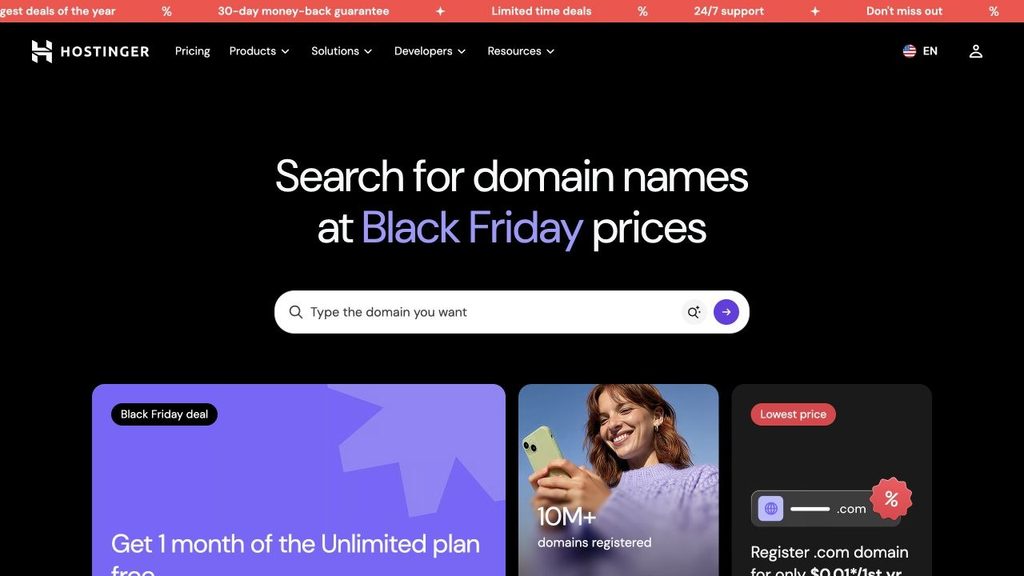
The live page advertises a .com first-year promotion from $0.01. Treat that as an offer to investigate, not as an annual ownership cost. Confirm the minimum registration term, any bundle requirement, later-year charges, and renewal amount before comparing it with a standalone one-year registration.
We have not used a crossed-out price as a verified renewal quote. A regular registration reference price and a renewal price are not necessarily the same thing. If you already have hosting elsewhere, compare the domain on its own merits rather than paying for a bundle you do not need.
Verdict: A practical option for a coordinated website launch, provided the full term costs suit you.
8. Squarespace Domains — Best for existing Squarespace users
Best for: Buyers who value keeping domain and Squarespace website management together.
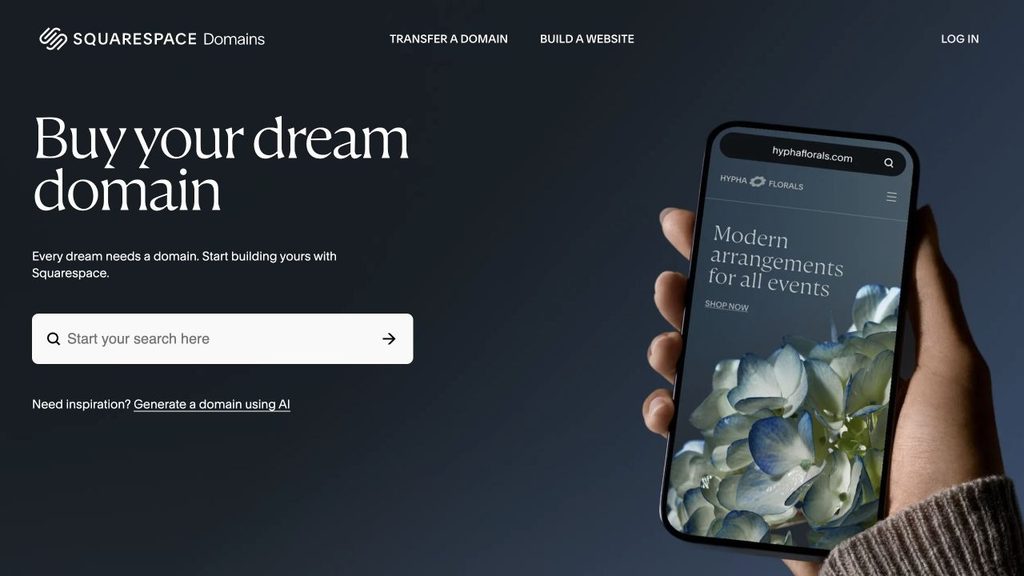
Squarespace Domains includes WHOIS privacy for eligible domains and offers domain forwarding and account security features. Its public page presents a price-inclusive approach, with taxes and fees accounted for in the shown quote. Search your exact extension to see its current registration and renewal terms.
The convenience is clearest when you already use Squarespace. For a domain-only portfolio, compare its quoted long-term cost and management features against dedicated alternatives. We did not establish a comparable public .com registration-and-renewal pair during this check, so no universal rate is asserted here.
If you are looking for Google Domains, Squarespace says the migration of Google domains has been completed. Google Domains is therefore not included as a separate current consumer registrar choice in this list.
Verdict: A convenient home for domains tied to a Squarespace workflow.
How to compare the real cost of a domain
Start with the extension you actually want. A registrar can be competitive for .com and less attractive for another extension. Check the first year, renewal, transfer, mandatory fees, privacy, and any minimum term in the same currency. Separate optional email, hosting, and security subscriptions from the domain itself.
For a simple three-year estimate, add one registration year and two renewal years. Atom’s current standard .com figures give $9.97 + $11.65 + $11.65 = $33.27. Spaceship’s advertised rates plus its separately listed fee give $9.68 + $10.88 + $10.88 = $31.44. Namecheap’s standard sale price and renewal rates, including the stated annual ICANN fee, give $52.64.
These calculations illustrate the difference between a low entry price and a low ownership cost. They assume unchanged prices, exclude any applicable taxes and optional products, and do not apply to premium names. A longer prepaid term may produce a different total. Before paying, save the final price breakdown and check how automatic renewal will be billed.
Privacy, security, and accreditation: what to check
Free privacy is valuable, but extension rules matter. A provider’s “included privacy” statement should not be read as a promise that every extension hides every field. Privacy or redaction also does not remove your responsibility to provide accurate registrant details. Check eligibility for the exact domain rather than assuming all suffixes behave like .com.
For security, look for two-factor authentication, registrar locking, clear recovery options, renewal reminders, and appropriate DNS controls. Use an account email you will continue to control. A business domain should be held in an account the business can recover, rather than in a departing contractor’s personal account. Keep a record of who controls renewals and DNS changes.
ICANN’s accredited registrar directory identifies contracted registrars and their IANA numbers. Use it to verify the legal registrar behind a brand, especially if the service operates as a reseller. Accreditation is a useful check for generic extensions; it is not a comparative guarantee of support quality or the lowest prices.
Registering, transferring, or buying an owned domain
Register an available domain when no one currently owns the name and you can obtain it at the normal registration rate. Transfer a domain when you already own it and want another registrar. Buy an owned domain when your preferred name belongs to someone else. Those actions have different costs and should not be combined in a single “from” price.
For a transfer, first check eligibility and access to the current account. ICANN policy allows restrictions during the first 60 days after initial registration or a registrar transfer, and a change of registrant can also trigger a lock. Check the relevant rules before updating ownership details or planning a time-sensitive move.
A registrar transfer is also separate from moving a website. Preserve your DNS records and establish who will provide DNS after the move. Your site and email depend on those records, regardless of where the domain registration is billed. Confirm whether the transfer price adds a registration year and what renewal rate follows.
Frequently asked questions
Which domain registrar is best overall in 2026?
Atom is our editorial first choice for founders who want naming, registration, and premium-domain discovery in one place. Choose according to your priorities: Cloudflare suits its DNS users, Porkbun offers direct pricing comparisons, and Spaceship has a low published .com renewal rate. The best fit changes with your extension and workflow.
Can I get a domain for free?
A free-domain offer usually shifts the cost into a paid bundle or limits the free period. Check which extensions qualify, whether an annual website plan is required, what happens when the domain renews, and what happens if you cancel the bundle. “Free for the first year” does not mean free ongoing ownership. Compare the whole package with buying only the services you need.
Is the cheapest registrar always the best choice?
A small annual saving matters across a large portfolio, but it may matter less for a business buying one important name. Consider the quality of the name, account recovery, DNS requirements, and ongoing administration alongside price. Avoid paying for unnecessary extras, but do not choose solely from a first-year promotion.
What happened to Google Domains?
Its domain customers migrated to Squarespace. Squarespace’s official FAQ confirms the migration is complete. Existing customers should check their current account and billing details there rather than looking for a new Google Domains registration.
How should I use Reddit recommendations?
Use community discussions to spot questions to investigate, such as recovery difficulties, unexpected renewals, or support experiences. Check dates, extensions, and whether the commenter describes a resolved individual issue or an ongoing limitation. A recent story can be useful context, but it is not a substitute for the registrar’s current terms or a representative service test.
Our recommendation
Start with Atom if you are building a brand and want to compare available registrations with stronger owned-name options. Its combination of naming tools, competitive standard .com pricing, and premium marketplace access makes it our preferred overall choice for that audience. Shortlist a cost-focused alternative if you already know your name and only need economical registration.
Before committing, compare the renewal rate for your exact extension, confirm privacy eligibility, and review the full checkout term. Then choose a name and registrar you can comfortably keep for years.