Rewind & Capture

How Tech Brands Got Their Names

  • Step By Step Naming Guide
  • How Brands Got Their Names
    • How Food Brands Got Their Names
    • How Tech Brands Got Their Names
    • How Car Brands Got Their Names
    • How Fast Food Brands Got Their Names
  • Test A Startup Name
  • Naming Partners
  • Name Ideas By Industry
  • Blog
  • Our Story

Here’s Why Valuer’s Brand Name Works

September 2, 2021 by Tristan Brown Leave a Comment

“Our main goal is to matchmake the brightest startups with the right corporation, at the right time.” — Valuer.ai

The global economy is evolving, technology is growing fast, and disruption is inevitable. Every company in this race for survival must seek startups with the talents that can transform their business and give it an edge in the market, and to do this, one place they turn to is startup accelerators.

But, just like these companies, if there’s anything that has plagued startup accelerators and incubators, it’s the fact that it’s becoming increasingly easy to waste time, energy, and finances finding and coaching a startup that only ends up failing. Remember ScaleFactor and Goko?

Today, there are countless startups popping up across the world at alarming rates. These startups are pouring in so fast that it’s becoming challenging for business incubators and accelerators to identify truly promising startups from the flood of fragile ones out there.  

And that’s where Valuer.ai comes in. Valuer is a powerful startup intelligence platform that allows investors, enterprises, and corporations to connect with unique high-performing startups to boost their growth and innovation.

Valuer’s AI-powered platform has been a game-changer for corporations trying to recruit startups into their innovation labs. It also helps accelerators consistently identify unique startups to include in their next round of accelerator programs.

But that’s not all, Valuer.ai is a key element that has helped countless angel investors find startups that embody striking opportunities in a niche that interests them.

Valuer’s Mission in a Flooded Startup Economy

Group of Friends Hanging Out

Courtesy: Pexels

“The world does not lack ideas; the world needs to know where those ideas are, and what they can be used for.” – CEO of Valuer, Dennis Juul Poulsen

With over 407 million entrepreneurs and 305 million startups created every year, big businesses are anxious to innovate and develop in order to remain relevant in our ever-evolving economy. 

And to help businesses achieve this goal, Valuer aims to make it easier for corporate companies and accelerators to find, access, and connect with promising startups. 

Valuer.ai does that by leveraging its expertise in the startup sector and engaging its massive database of 650,000 startups.

Companies relying on Valuer.ai get a monthly analysis of a select number of startups that’d be perfect for future innovation, cooperation, and investment.

Valuer.ai is an excellent tool that has helped several corporations transcend the chaos and identify the best startups that were perfect for their needs. 

How Valuer’s Brand Name Reflects its Mission

Man in Black Suit Achieved an Accomplishment

Courtesy: Pexels

Everyone who’s ever built a successful business understands that setting up a clear mission statement for your company can instantly unite your brand to its target customers. 

And once you’ve established your brand’s mission statement, it becomes a lot easier to connect everything your brand does to that singular mission.

Now, when it comes to Valuer, the company doesn’t just promise to connect corporations with the brightest startups; it also incorporates this mission into its brand name — Valuer.

Valuer is a powerful name that doesn’t just communicate what the company does, evaluating startups, but also instantly communicates the brand’s mission to its customers, which is helping them find valuable startups.

One look at the name and investors, business incubators, and accelerators get an instant understanding of what the brand can help them achieve, how it can help them save time, energy, and of course, finances.

Valuer is the perfect name for a brand seeking to connect great startups with the best investors, accelerators, and incubators in the market.

Tristan Brown
Tristan Brown
Squadhelp.com

Filed Under: How Tech Brands Got Their Names Tagged With: brand names, branding, company names, naming, tech brands

Why is Lollapalooza Called Lollapalooza?

August 20, 2021 by Tristan Brown Leave a Comment

The annual music festival, Lollapalooza, has become a much-loved event. The four-day festival has been operating since 1991 and yet it still attracts people from across the USA and around the world. This enduring success is an impressive feat, so we’ve taken a look at the way the Lollapalooza brand was established, the meaning behind the name, and how the festival has managed to remain relevant even after all of these years.

The Origin of Lollapalooza

The idea for Lollapalooza was born in 1990 when co-founder, Perry Farrell, decided to do a farewell show for his band Jane’s Addiction. The concept of the event was quite unique at the time. Unlike other big music festivals like Woodstock that operated as a one-time event, Lollapalooza was designed as a touring show. The first Lollapalooza consisted of numerous shows held at different venues across the USA and Canada between mid-July and late August. With a diverse lineup of impressive acts across the alternative rock, rap, and industrial music genres, the inaugural Lollapalooza was a huge success, even being dubbed by MTV as the “tour of the summer”. 

In addition to the extended design of the festival, Lollapalooza stood out from the crowd due to the inclusion of non-musical features. The music was obviously the focus, but there were also circus and freak sideshows, virtual reality gaming, stalls promoting political awareness, and art exhibitions. The collection of activities established the Lollapalooza brand as more than simply a music festival, but a cultural event that drew like-minded individuals together.

The triumph of the initial Lollapalooza event was supported by the popularity of alternative rock, with the genre exploding during the early 1990s. Even now, that first tour is renowned for being hugely successful. It was rated as the best concert in the last 35 years by Spin, a title that demonstrates the festival’s impact and long-lasting reputation.

The Ups and Downs of Lollapalooza

Despite the significant and surprising success of the first Lollapalooza music festival, it wasn’t all smooth sailing for the event. The first tour attracted crowds interested in alternative bands, those that weren’t entirely visible in the mainstream music scene, however, the second Lollapalooza featured headline acts that had already experienced considerable success on the music charts. This disappointed many of the original fans and the subsequent tours in 1992 and 1993 did not perform as well as the inaugural event.

These tours did, however, see the introduction of interactive activities. It was during these years that Lollapalooza expanded to become more than just a music festival, and instead a participatory, cultural experience. While attendees were generally happy with these additional activities, they were not happy with the associated increase in ticket prices. Patrons were also disgruntled by the expensive price tag on food and water.

By 1996, Farrell had taken a step back from Lollapalooza to focus on other projects. The producers of that year’s event made the controversial decision to book Metallica as the headlining act, which angered fans and the cofounder. Farrell played no part in the planning of the 1996 event, yet he made it clear that he disagreed with the decision by quitting the tour altogether. 

After heavy criticism, the event coordinators attempted to return to Lollapalooza’s roots in 1997. The tour went ahead with a mixed response, but as fate would have it, the event was the last. It obviously didn’t achieve the success it needed as the producers were unable to book a headlining act for 1998 and the tour was cancelled.

Following a hiatus that lasted several years, Lollapalooza was resurrected by Farrel when he gathered Jane’s Addiction once again in 2003. The event performed moderately, with the high cost of tickets discouraging many people from attending. In 2004, the event was cancelled mid-tour due to a lack of ticket sales.

The event wasn’t truly revived until 2005 when Farrell joined forces with Capital Sports and Entertainment to produce a two-day festival in Grant Park, Chicago. It proved to be a success and since then, Lollapalooza has gone from strength to strength, establishing itself as an iconic festival that is known the world over.

Where did the Lollapalooza name come from?

The name ‘Lollapalooza’ was chosen by Perry. He has said that he heard the word when watching a Three Stooges movie and it stuck with him. The term dates back to the 19th Century and means extraordinary or impressive, and Perry thought this was well suited to his festival vision. Over the years the word has also been used to describe a large lollipop, which is why Lollapalooza’s initial logo consisted of a figure holding a lollipop.

How has the Lollapalooza name played a role in the success of the brand?

There’s no denying that Lollapalooza has experienced a rollercoaster when it comes to its success over the years. It has had some serious lows and some serious highs, but in the end, prevails as one of the largest and most well-known festivals in the world. This is largely in part to the Lollapalooza name and the important role it has played in branding.

Despite the downfalls of the festival, the name still conjures up images of the wildly successful first event and the positive history of the brand. It’s unique, catchy and sounds fun, making it the perfect name for an event that is as engaging and diverse as this festival. Without it, the festival may not have bounced back from the challenges it experienced quite as easily. In fact, it might not have recovered at all.

We understand what it takes to find the perfect name for your business to give it every chance of sustained success. Check out our tips to find an enduring brand name idea like Lollapalooza. Still struggling to find that perfect name? Try utilizing a powerful AI-driven business name generator to use as a springboard for creativity.

Tristan Brown
Tristan Brown
Squadhelp.com

Filed Under: How Brands Got Their Names Tagged With: brand creation, branding, naming

Why is Lululemon Named Lululemon?

June 2, 2021 by Tristan Brown Leave a Comment

Lululemon is an athleisure wear giant, with the brand becoming a household name across the globe. So how exactly did it reach this level of success?

About Lululemon

The company was founded in 1998 by Chip Wilson. Originating in Vancouver, Canada, the brand was initially inspired by the practice of yoga, with the design studio operating as a yoga studio at night. The intention was to create athletic wear that was fashionable and comfortable for yoga, while also building a community where people could discuss health and fitness.  

The premises, which initially served the dual purpose of being a site for both design and yoga, became Lululemon’s first store in 2000. As the company grew, so did the number of stores and online presence, leading to the hugely successful brand we know today. 

How Lululemon Got Its Name

The iconic Lululemon name was derived from an unconventional, and somewhat insulting, background. Wilson had previously experienced success in the Japanese market with a skateboard brand, ‘Homeless’, something he partially credited to the fact that the name had an ‘L’ in it. The Japanese alphabet does not contain this sound, making the pronunciation of this letter foreign and therefore quite difficult. Wilson believes that the exotic nature of a brand name with an ‘L’ sound allowed Homeless to stand out from the crowd as no Japanese company would create a name with this letter.

When Wilson was looking for a brand name for his new activewear company, he had this theory in mind and sought to find a name with an ‘L’ in it. In 2004, he spoke to National Post Business Magazine about the name ‘Lululemon’, explaining that he wanted to create a name with “three Ls [to] see if [he could] get three times the money”. Wilson was playing around with the L sound when he came up with Lululemon, a name that does indeed contain three Ls. He further added that “it’s funny to watch [the Japanese] try to say it”, which is perhaps not the most moral reason to name a company.

Wilson is not backward in sharing his opinion and has become known for lacking political correctness, however, he was more careful with his wording when talking about the brand name in 2009 following some backlash to the 2004 interview. While Wilson acknowledged that the ‘L’ sound “does not exist in Japanese phonetics”, he stated the Lululemon was simply created for the 3 ‘Ls’ and means “nothing more and nothing less”.

Despite the arguably inappropriate theory that led to the name Lululemon, there’s no denying its success. It would appear that there may in fact be some truth to the idea that a name with an ‘L’ stands out in a Japanese market, and that this helped Lululemon get the attention required to catapult it to the level of success it experiences today. 

The Power of a Brand Name

While some of the strength behind the Lululemon name might be linked to the three ‘L’ sounds, we can assume that there are also other factors at play. The name itself gives no indication that the brand is focused on athleisure, yet it has managed to establish this association regardless.

This is for a number of reasons. Firstly, the made-up name is unlikely to be confused with anything else. It is engaging and distinct, allowing a strong brand to be established. Secondly, it is easy to remember. It’s not boring, but it’s also not so obscure that people cannot understand it. Finally, it passes the ‘crowded bar test’. If you say it in a noisy room full of people, most people will be able to comprehend what you’ve said.

All of these components make a strong business name, and when paired with a strong strategic direction like Lululemon, can help a company to experience significant and sustained success. 

If you’re looking for the perfect business name for your company, try utilising a powerful and effective brand name generator. A name can be the determining factor in whether or not a company succeeds, so you want to make sure you get it right!

Tristan Brown
Tristan Brown
Squadhelp.com

Filed Under: How Brands Got Their Names

Why is POSaBIT Called POSaBIT?

April 6, 2019 by Travis McDonald Leave a Comment

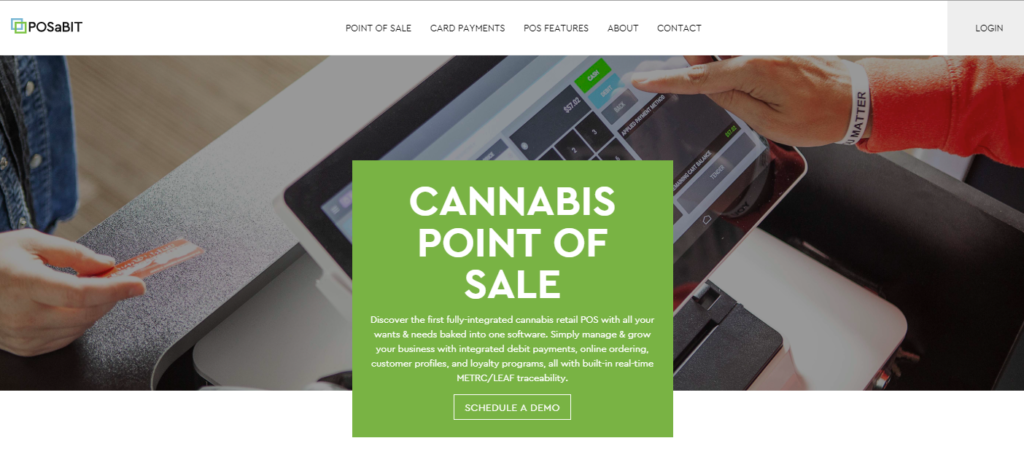
Like many great ideas, the origins of POSaBIT begin with two pals huddled around a winter campfire, sharing a drink and discussing business opportunities.

Ryan Hamlin and Jon Baugher, native Washingtonians, had known each other for a number of years—their children had grown up together—and the duo were looking to dive into a new business venture after the success of Hamlin’s first startup, PlaceFull, an online booking and scheduling solution for small businesses.

This was early in 2015, several years after Washington and Colorado had become the first U.S. states to legalize the recreational use of marijuana, and in this short amount of time, the industry had already become a potential behemoth.

Hamlin and Baugher had close to five decades of software experience between them, holding positions at Microsoft and Microvision, and although they saw the vast potential for growth and innovation in the cannabis industry, they weren’t as passionate about opening a dispensary as they were for building technology to help dispensaries grow and scale their operations.

Though cannabis sales were rising fast across Washington and Colorado, the single biggest obstacle with this market opportunity was that consumers couldn’t use credit or debit cards. These credit card and banking institutions had stipulations in their contracts that disallowed their customers to use their cards to purchase any item that is considered to be illegal (e.g. Schedule 1 drug) under federal law, which marijuana still is in the United States (though in 2018, it was legalized at the federal level in Canada.)

But Hamlin and Baugher believed they could build a powerful solution that would add a layer of convenience for both dispensary owners and consumers.

The A-ha Moment

In order to get around these conditions in the card brand guidelines, they decided to harness the power of another nascent market that was closer in line to their decades of experience: cryptocurrency. They thought that if people couldn’t buy their favorite products directly from the store with plastic, then maybe there could be a point of sale system that would allow the customer to purchase cryptocurrency right there in the dispensary and use it to pay for their goods (or hold the cryptocurrency as an investment to be spent at a later date).

This proved to be a complicated project to navigate. During the two years between POSaBIT’s conception and its launch, the duo spent most of their time working with their legal team (Perkins Coie), as well as the Washington State Department of Financial Institutions (DFI), to make sure that every legal and regulatory avenue had been explored and that there was nothing that the newly created startup hadn’t thought of yet.

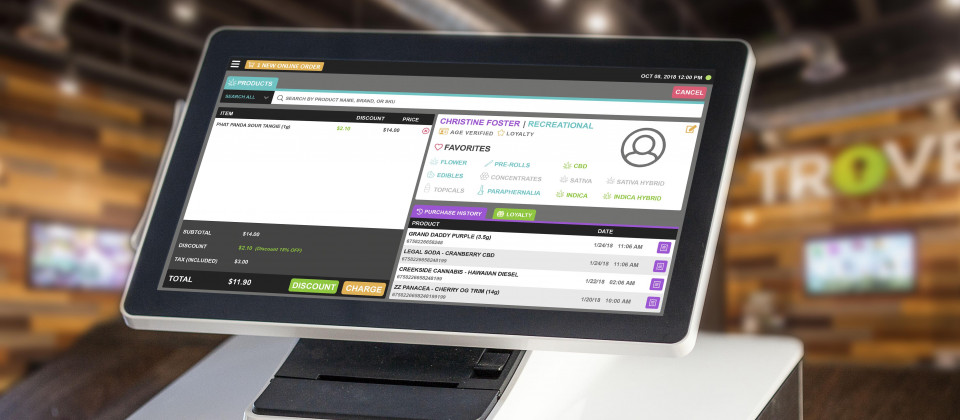
  • Management Console
  • Customer Profiles & Favorites
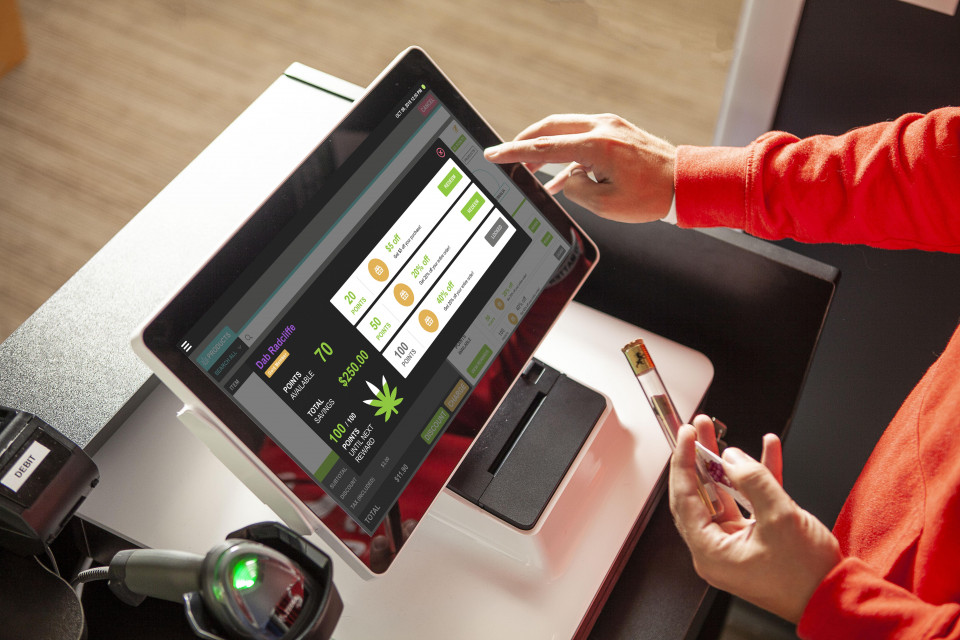
  • Integrated Loyalty
  • Integrated Online Ordering

As it turns out, their resiliency started to pay off. In 2017, POSaBIT took in $1 million of sales and had their POS systems in ~23 stores in Washington and Colorado. In 2018 , POSaBIT did over ~$4 million in revenue and expanded their solution to over ~130 stores across the United States.

Not to mention how bright the future is looking for the company. On April 8th 2019, POSaBIT IPO’d on the Canadian Stock Exchange (CSE) under the ticker “PBIT.” According to Hamlin, they plan to use the additional capital to hire more employees, build awareness and enhance their solution to bring their point of sales systems to more businesses across the United States and Canada.

Why is it called POSaBIT?

Hamlin and Baugher actually came up with quite a few names, like CreditBuds, PayDope, and 420Bit, before they landed on POSaBIT. Though all of these possible monikers were catchy, they decided on POSaBIT because it better suggested the positioning of their brand.

They were hoping to develop one of the most innovative point of sale software companies in the business by capitalizing on the rise of cryptocurrencies like Bitcoin.  

So, POS = point of sale and Bit = Bitcoin The name is pronounced: pause a bit, and it has a second connotation that some less experienced cannabis users might not quickly connect the dots on.

That is, you breathe in, take the smoke down, and pause a bit. This second meaning is playful and adds an insider’s know-how to the company’s already impressive ethos.

So, whether or not you’re a fan of the green stuff, there’s no denying that POSaBIT is at the forefront of one of the most lucrative new markets in the country. They’ve carved out their own niche in this field by taking a risk and staying on the cutting-edge of revolutionary developments in the tech and economic world.

With all of that going for them, POSaBIT should definitely be on your radar for one of the fastest rising tech companies in 2019!

Next time you are at a dispensary and the budtender says “we only accept cash,” pause for a bit and ask why they don’t use POSaBIT? Can you think of other company names that have double meanings? Let us know in the comments below!

For transparency, Adam Lang (Founder of Rewind & Capture) is an investor of POSaBIT.

Travis McDonald
Travis McDonald

Travis McDonald is a professional freelance writer who creates content for a wide variety of clients. He received his bachelor’s in English from The University of Texas at Austin and his MFA in creative writing from Virginia Tech.

https://www.tmcdonaldwrites.com/

Filed Under: How Tech Brands Got Their Names

Why is GOLFimals Called GOLFimals?

February 26, 2019 by Travis McDonald Leave a Comment

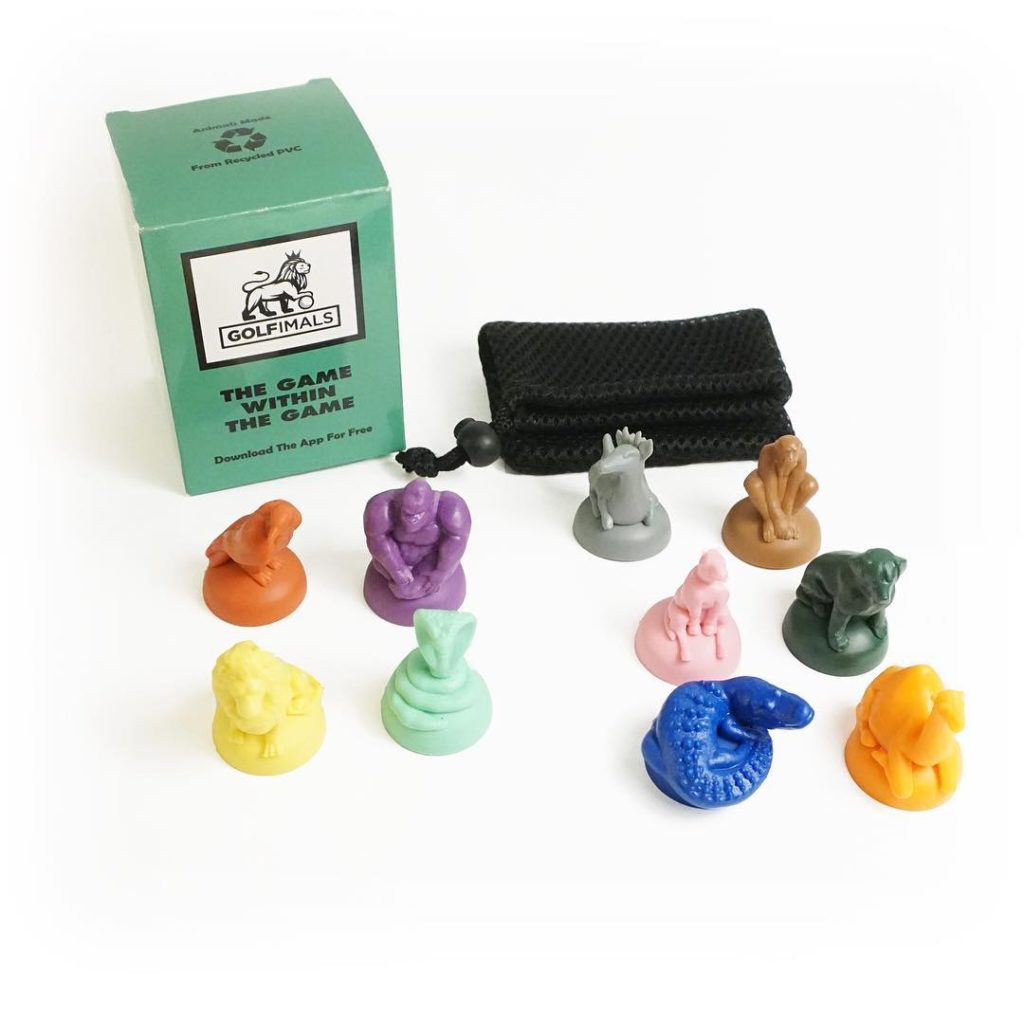
GOLFimals is a brand-new app developed by Kevin Fung that aims to inject even more competition and excitement out on the links. The app is a golf wagering game that uses animals, both digital and magnetic, to either reward or penalize golfers based on how well they’re swinging out on the golf course.

GOLFimals brand name
GOLFimals: The Game Within The Game

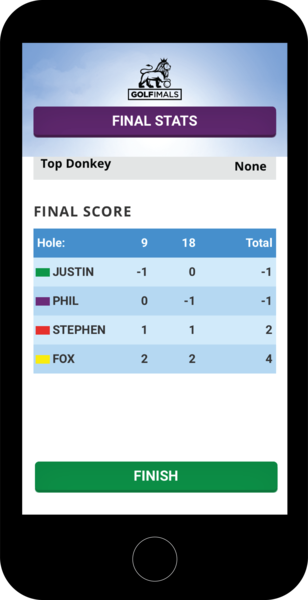
The rules are pretty simple. If at the end of your first hole, you’re the player with the lowest number of strokes, you’re awarded a lion and -1 point to your total GOLFimals score, which is independent of your overall golf score. Then, if you have a bit of trouble on the next hole and whack your ball into a water hazard, you’ll be penalized with an alligator and +1 point. Like golf, the goal is to have the least amount of points at the end of the competition, so a +1 point might hinder your overall GOLFimals score.

Not only will you collect these animals through the app, but you can also purchase a physical set, which magnetically attach to your golf cart’s strut bar to show off your skills or call out your opponent’s weaknesses. The animal collections come in a 4-piece pro animal set, which is stocked with a cobra, eagle, gorilla, and a lion, or the 6-piece classic set, with a donkey, deer, camel, alligator, and dog. You can purchase all 10 animals for only $39.95 through the GOLFimals’ website or on Amazon.

The naming story behind GOLFimals.

The game is designed for 2 to 6 players, and at the end of your match, each player tallies up their GOLFimals points, and as mentioned, the golfer with the least amount of points wins. The app will help you keep track of your score and your animals, so the process of finding out who the GOLFimals champion is a cinch.

Check out this video if you want some more info on how GOLFimals works:

Why is it called GOLFimals?

The practical reason why GOLFimals chose the brand name stems from the company’s desire to secure a .com and have a unique domain.

“We felt a name that best portrayed our game at its core would best resonate with active users and potential customers and make it easiest to share. The 3 most prominent words in our eyes were: Animal, Golf, and Game.”

– Kevin Fung, Founder of GOLFimals

The team got together to brainstorm on how they could include variations of the three words in their brand name while also making sure the .com was available. Some of the variations they came up with for “animal” were “zoo,” “mammal,” “beast,” “creature,” and “brute.” For “game” they landed on “match,” “contest,” “tournament,” and “trophy.” Then they decided that because “golf” was the most prominent aspect of their game, they should keep it intact in the brand name.

The team tried out a few of the variations they’d brainstormed, but nothing really clicked until Fung, in a stroke of inspiration (pardon the pun), mashed “golf” and “animals” together. The new brand name was unique, memorable, and represented the most important aspects of the company’s vision. It was an overwhelming office-success right from the start. As Fung, himself, put it: “Once I put ‘golf’ and ‘imals’ together, and verified that the URL was available, I purchased it immediately.”

The lesson here is that some brand names take months to develop and others come out of nowhere, as if they were sitting around waiting for an industrious innovator to pluck them right out of the air. Here at Rewind & Capture, we think that whenever you have these potentially career-changing insights, it’s always a good idea to go with your inspiration. The latter is exactly what happened with GOLFimals, and the new tech company couldn’t be more delighted with their catchy moniker.

So, whether you’re a life-long golfer, or just looking to spice up your weekend game, GOLFimals is a fun, creative, and inexpensive way to have a blast while working on your swing.

Thanks for swinging by, can you think of any other companies who adopted a similar naming strategy ? Let us know in the comments below!

Travis McDonald
Travis McDonald

Travis McDonald is a professional freelance writer who creates content for a wide variety of clients. He received his bachelor’s in English from The University of Texas at Austin and his MFA in creative writing from Virginia Tech.

https://www.tmcdonaldwrites.com/

Filed Under: How Tech Brands Got Their Names

  • 1
  • 2
  • 3
  • …
  • 46
  • Next Page »
Crowdsource a name with Atom

Join Our Naming Community

Rewind & Capture

  • © Copyright 2025
  • Rewind & Capture
  • All Right Reserved

About

  • Our Story

Naming Resources

  • Step By Step Naming Guide
  • Test A Startup Name
  • How Tech Brands Got Their Names
  • How Food Brands Got Their Names
  • Naming Partners
  • Blog